


 03 9070 5784
 Help & Support
 Track My Order



Recently Viewed

 Benchstar Ø 360MM Wok With Lid For Induction IW-WOKLID36
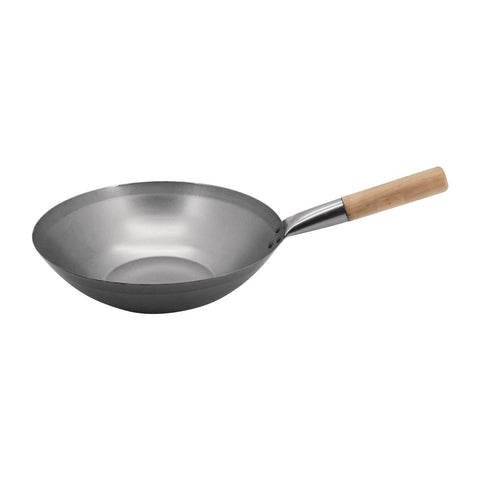


 Vogue Non-Stick Teflon Platinum Wok 300mm - CE165
300(W) x 93(H) x 300(D)mm
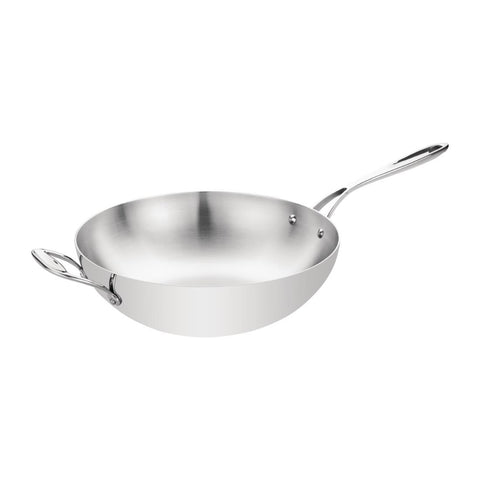
 Vogue Tri Wall Wok Flat Base 300mm - Y261
305(W) x 100(H) x 305(D)mm

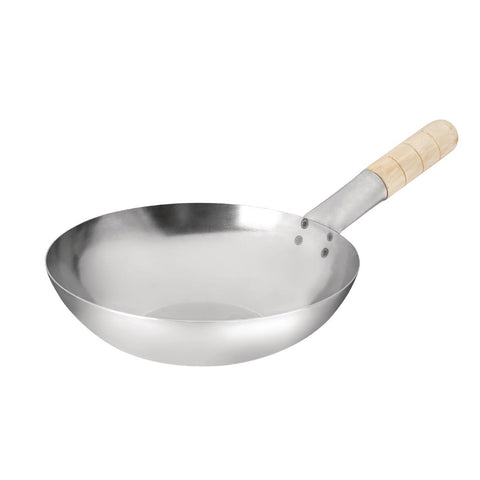

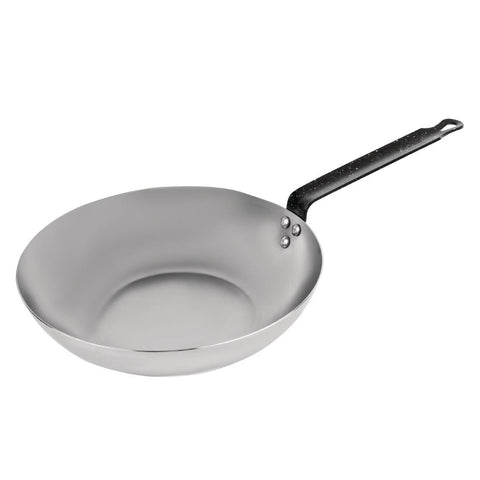
 Vogue Carbon Steel Wok 280mm - GG722
273.8(W) x 64(H) x 273.8(D)mm
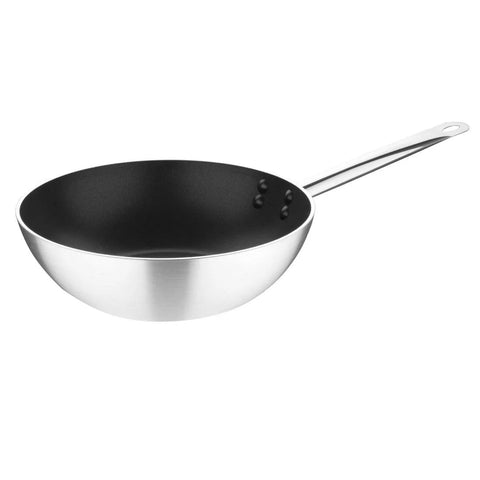
 Vogue Non-stick Teflon Aluminium Platinum Plus Wok 300mm - FB690
300(W) x 95(H) x 300(D)mm

 IWOK Ø 500mm for Induction Wok IW-WOK50
A wok pan is what a stir fry gets cooked in: very high heat, with the food kept moving. Wok pans have thin walls so they respond instantly and a deep curve so food can be pushed up out of the heat.
Carbon steel is the standard. It is light, takes heat as hard as a burner can give it and builds a seasoned surface with use. Cast iron woks hold more heat but take longer to get there and are far heavier. Non-stick woks exist and are a compromise, because the coating cannot take the temperature a stir fry actually wants.
The base shape is dictated by the burner. A round-bottomed wok needs a wok burner or a ring; a flat-bottomed wok works on a flat top or an induction surface. Buying the wrong base for the hob is the most common mistake in this category.
Commercial wok pans sit in the commercial cookware range and pair with commercial gas woks and induction wok burners. The heavier alternatives are in commercial cast iron cookware.
Matching pans to the burners you already have? The price guide has the carbon steel, cast iron and non-stick woks priced in one place.
Round if you have a dedicated wok burner, because the flame wraps the curve and that is what gives the heat across the whole surface. It is the correct answer for a Chinese kitchen.
Flat if the wok is going on a flat top, a domestic-style hob or induction. A round wok on a flat surface only contacts in the middle and cooks like a small pan.
Strip the factory coating, heat the bare metal until it colours, then build thin layers of oil over heat. The result is a dark, slick surface that releases food and resists rust.
It continues to improve for months. A wok that is scoured back to bare steel every night never gets there, which is why woks are wiped rather than scrubbed.
Too much food, or a pan that is not hot enough before the food goes in. Both drop the surface temperature below what is needed to sear, and the food then releases water and boils in it.
Cook in smaller batches and get the wok properly hot first. A thin carbon steel wok recovers temperature in seconds, which is the whole reason it is thin.
A seasoned carbon steel or cast iron wok, no — the detergent strips the seasoning and it will rust before it dries. Stainless and non-stick woks can, and non-stick should not if you want the coating to last.
Wipe out hot, rinse, dry on the burner and oil lightly. Keep them out of the commercial dishwasher as a standing rule.
Sized to the single largest portion you cook at once, not to the biggest batch. Woks do not do batch cooking well; the technique depends on food being in a thin layer.
Most sections hold two of one size rather than one large and one small, because in a rush both are on the burner.
A long-handled wok spatula or shovel, a ladle, and a rest. Standard pan tools are too short for the depth and too flat for the curve.
Keep them at the station. See commercial spatulas and commercial mixing paddles for the long-handled options.
On a standard flat induction hob, only a flat-bottomed magnetic one, and even then the heat is confined to the flat contact area rather than running up the sides.
A dedicated induction wok burner uses a dished zone that couples with a round-bottomed wok, and that is the proper setup if the kitchen is going electric. The wok still has to be induction compatible, and a standard carbon steel wok may not couple properly, so check the pan against the burner before you buy either.

We have a special page just for stock that's warehoused in Perth.
Click Here to see all WA stockWhat our customers say about us on Google, and how Google scores our store for things like shipping and returns.
Store scores from Google