


 03 9070 5784
 Help & Support
 Track My Order



Recently Viewed
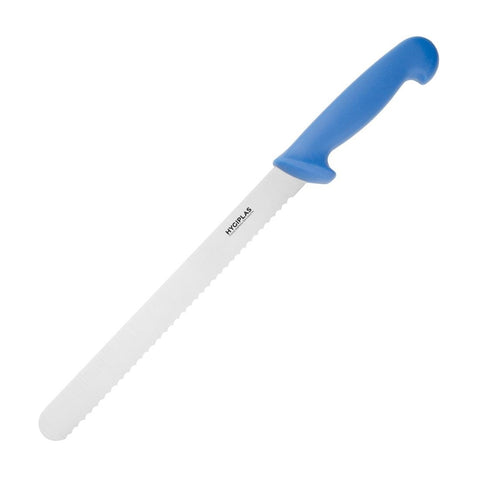

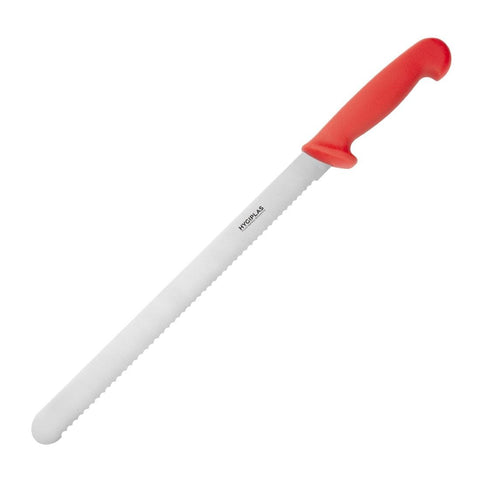

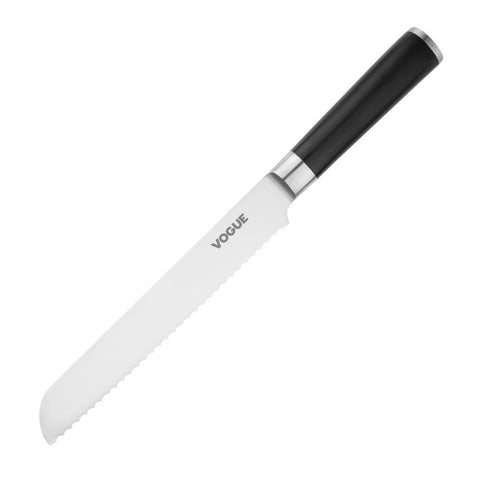

 Vogue Bistro Bread Knife 200mm - FS681
334(W) x 50(H) x 5(D)mm
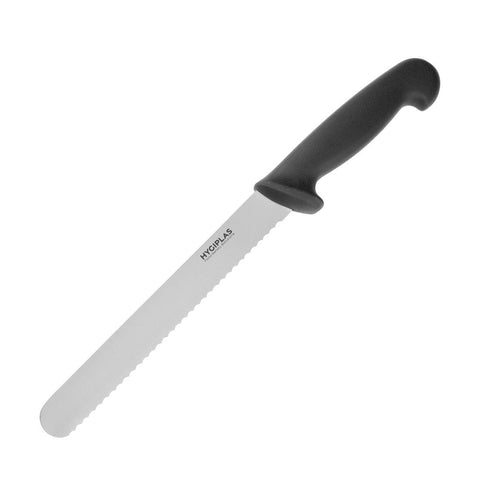

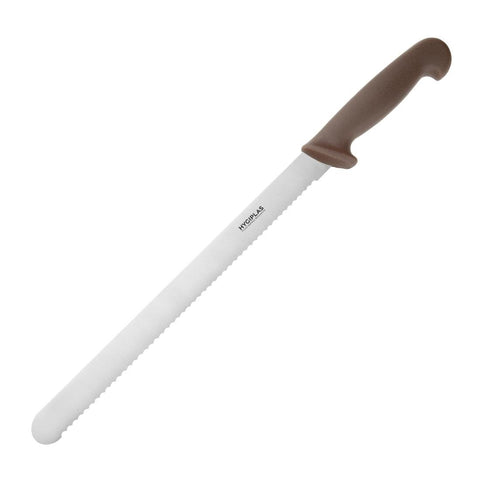

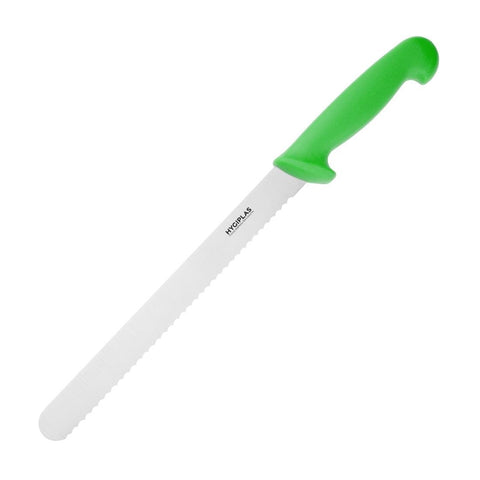

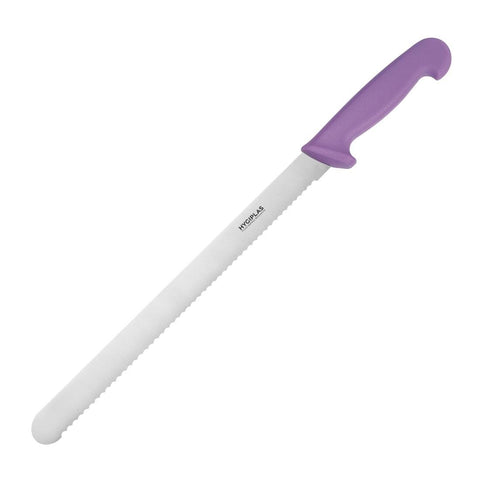

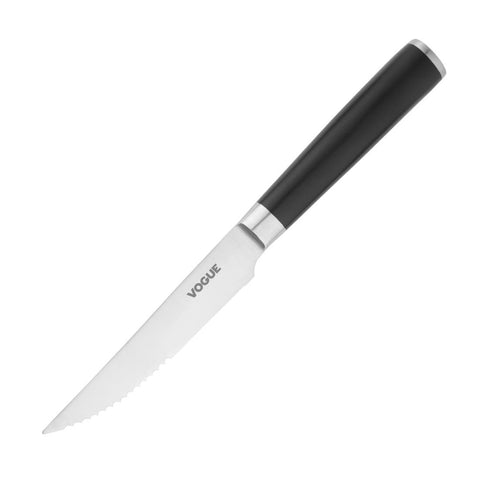


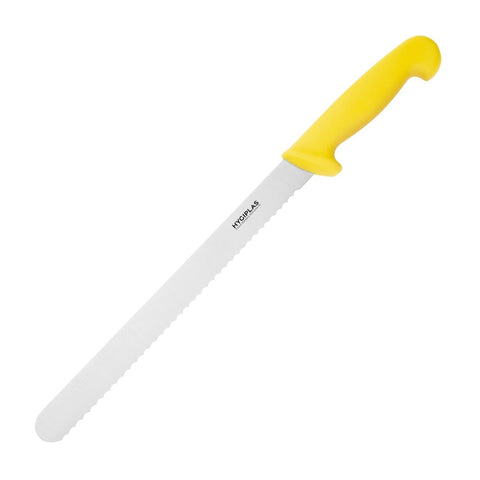

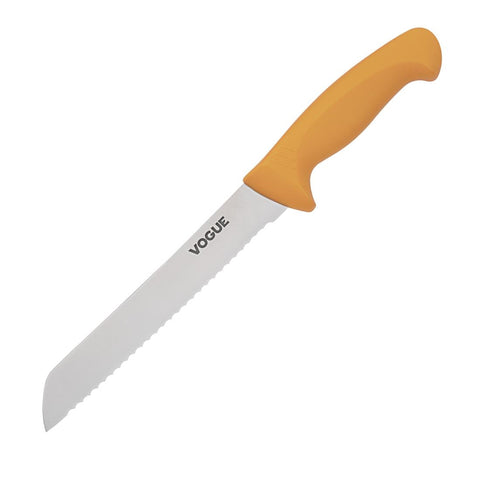

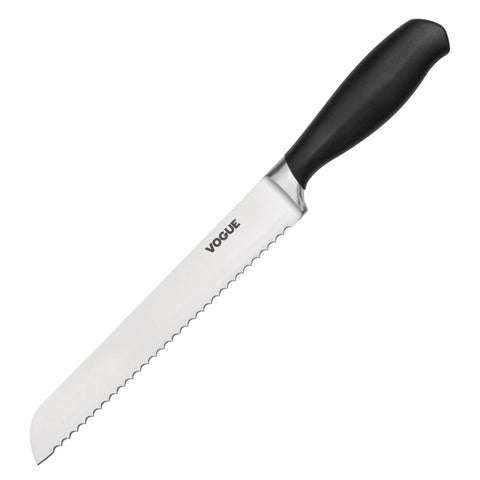

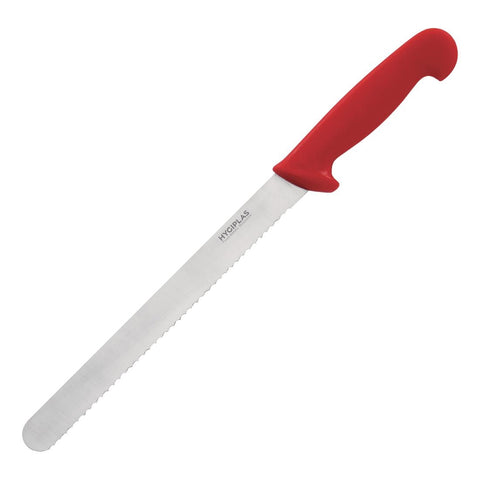

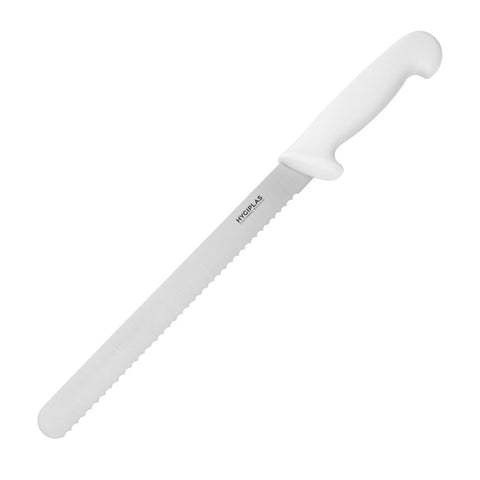

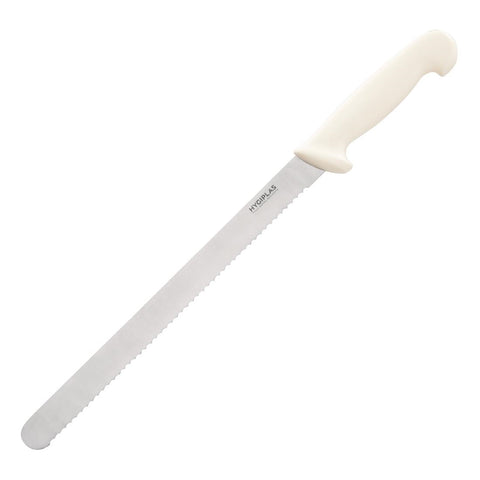

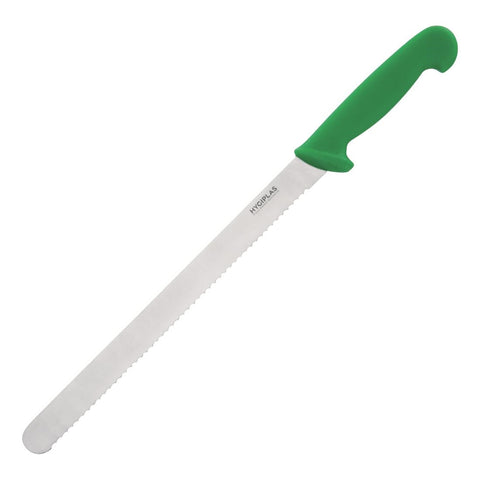

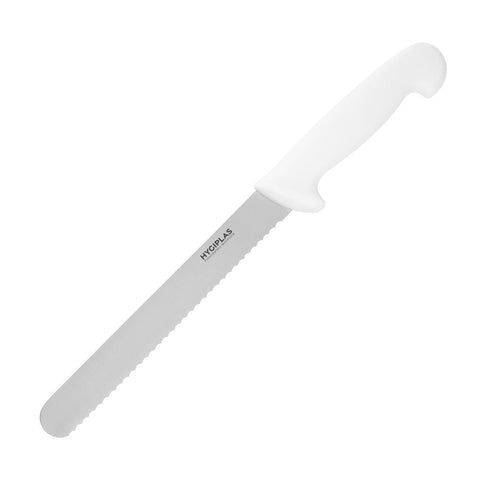

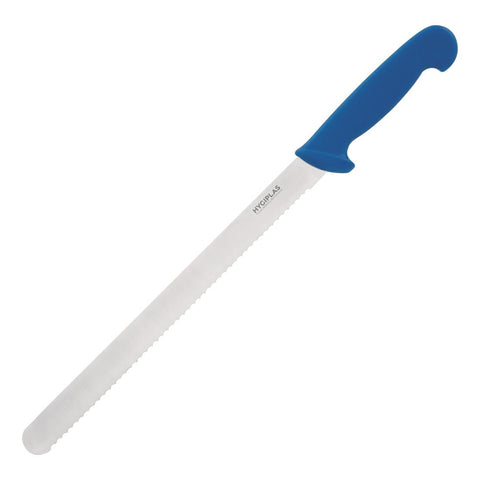

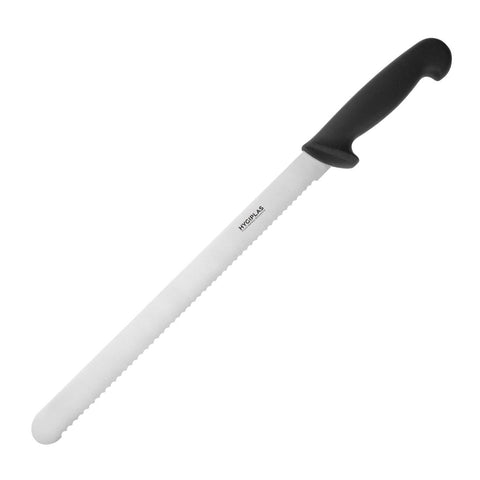

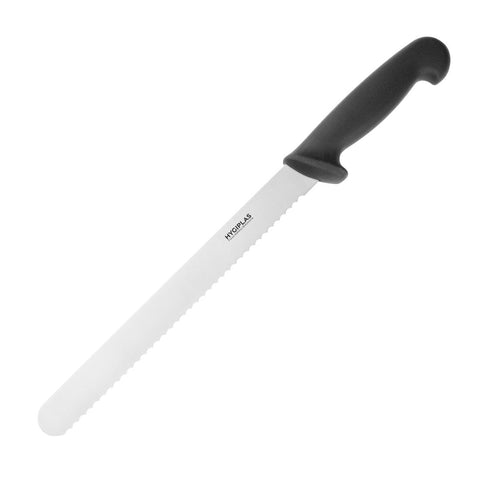

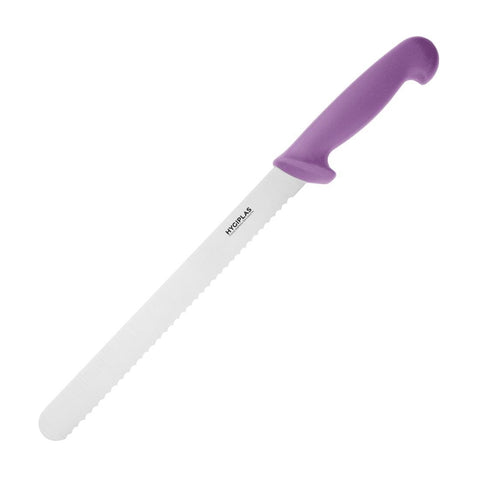

Bread knives saw through a hard crust with very little downward pressure, which is what keeps the crumb underneath intact instead of compressed into a wedge. That is the job no straight blade does.
A commercial bread knife is bought on blade length, tooth pattern and whether the serrations can be re-sharpened. Long blades slice a full sourdough in one pass; scalloped teeth are gentler on soft crumb; pointed teeth bite harder into a thick crust.
A professional bread knife is also the right tool for tomatoes, citrus and layered cake, which is why it earns a place on a bench that never sees a loaf. For volume slicing a bread slicer is faster and far more consistent than any knife.
Choosing between scalloped and pointed teeth, and which blade lengths to hold? The price guide lists the bread knives together so you can settle both at once.
Longer than the widest loaf you cut, so the whole slice happens in one stroke. A blade that has to be worked back and forth across a wide loaf tears the crumb at the end of each pass.
For a standard tin loaf a mid-length blade is plenty; for artisan rounds and long sourdough you want the longest practical. Blade lengths are listed per product and on specifications.
Scalloped teeth have rounded arcs and cut soft bread, cake and brioche without shredding. Pointed teeth bite into hard crusts and crusty rolls more aggressively but are rougher on anything delicate.
A bakery slicing both wants one of each. A cafe cutting sandwich loaves is well served by scalloped alone.
Yes, but not on a steel or a pull-through sharpener, which only touch the tips of the teeth. Serrations need a tapered rod worked in each gullet, or a service that does it properly.
Because of that, serrated blades are often run until they stop cutting and then replaced. Hold a spare rather than persevering — see the sharpeners range for the rod type that fits.
An offset handle raises the knuckles above the blade, so you can cut all the way through a loaf on a board without your hand hitting the bench. It suits sandwich production and slicing to order.
A straight handle gives better control for cake and fine work. Production benches tend to prefer offset, pastry sections straight.
For a layered or iced cake, yes — a long serrated blade cuts cleanly where a chef's knife drags icing through the sponge. Warm the blade and wipe it between cuts.
For precise pastry work and torting, a pastry knife is the better tool. The bakery equipment range covers the rest.
By hand and dried immediately. Serrated edges trap crumb and fat, so they want a brush rather than a wipe, and a commercial dishwasher knocks the teeth against racks.
Store it with the edge protected — a wall rack or a guard — because the teeth will mark anything they are stacked against.
It needs less force, which helps, and the real safety gain is that the loaf stops rolling under the blade.
Cut on a board with some grip, never towards yourself, and keep it out of a drawer. The rest of the commercial knives range follows the same rules.

We have a special page just for stock that's warehoused in Perth.
Click Here to see all WA stockWhat our customers say about us on Google, and how Google scores our store for things like shipping and returns.
Store scores from Google
