


 03 9070 5784
 Help & Support
 Track My Order



Recently Viewed


 VC Compact Food Process 12l HR-12
575(W) x 316(D) x 489(H)mm

 VC Compact Food Process 9L HR-9
570(W) x 385(D) x 460(H)mm

 VC Compact Food Process 6L HR-6
565(W) x 365(D) x 440(H)mm

 Yasaki Double Speeds Bowl Cutter 12l BC-12V2
376(W) x 315(D) x 623(H)mm


 Hallde Vertical Cutter Blender 3 Lt - VCB-32
285(W) X 335(D) X 440(H)mm

 Hallde Combi Cutter - CC-32S - CC-32S
285(W) X 350(D) X 465(H)mm


 Dito Sama Prep4You Cutter Mixer Food Processor 1 Speed 2.6L Copolyester Bowl P4U-PS2
247(W) x 328(D) x 456(H)mm

 Dito Sama Prep4You Combination Cutter/Slicer 1 Speed 2.6L Copolyester Bowl P4U-PS201
348(W) x 328(D) x 527(H)mm

 Yasaki Double Speeds 8l Table Top Cutter Mixer / Bowl BC-8V2
326(W) x 275(D) x 587(H)mm
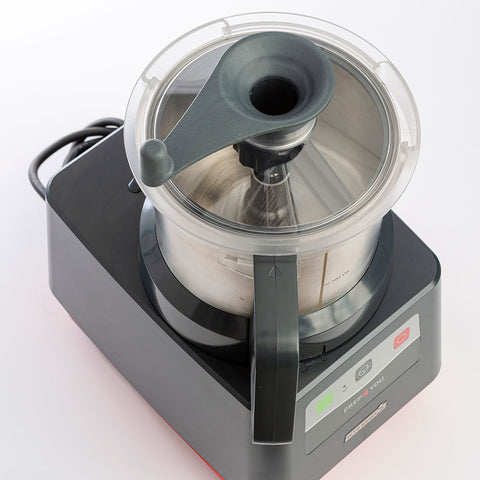
 Dito Sama Prep4You Cutter Mixer Food Processor 1 Speed 2.6L Stainless Steel Bowl P4U-PS2S
247(W) x 328(D) x 456(H)mm
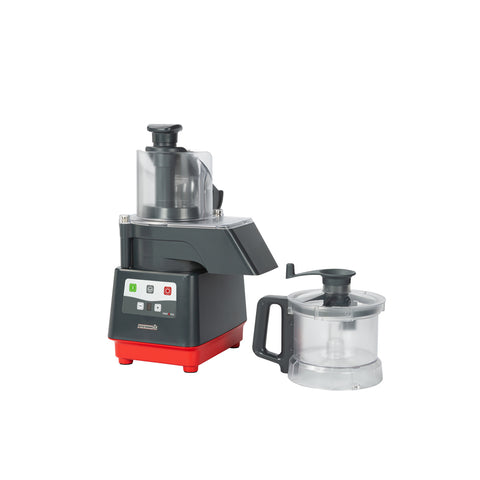
 Dito Sama Prep4You Combination Cutter/Slicer 9 Speeds 2.6L Copolyester Bowl - P4U-PV201
247(W) x 328(D) x 527(H)mm
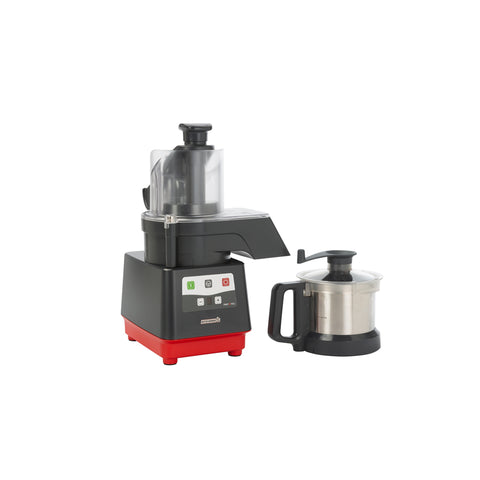
 Dito Sama Prep4You Combination Cutter/Slicer 9 Speeds 2.6L Stainless Steel Bowl - P4U-PV201S
348(W) x 328(D) x 527(H)mm
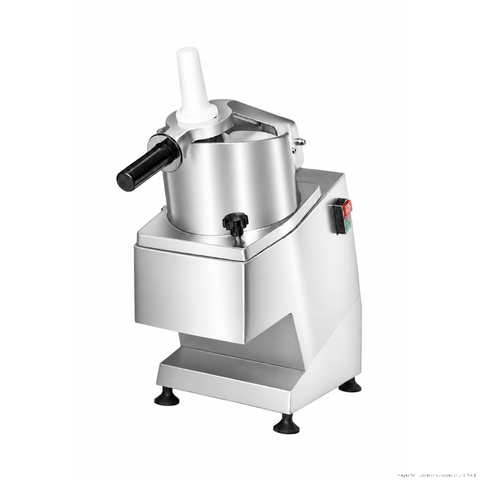
 Yasaki 300kg/h Heavy Duty Vegetable Cutter with 5 Discs - HLVC300-AL
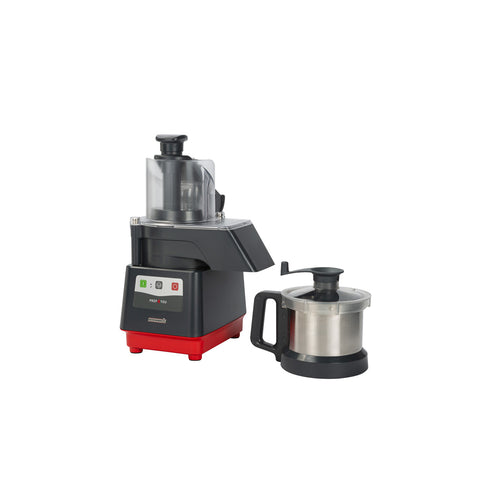
 Dito Sama Prep4You Combination Cutter/Slicer 1 Speed 2.6L Stainless Steel Bowl - P4U-PS201S
348(W) x 328(D) x 527(H)mm


 BakerMax 8 / 16 Slice Manual Pizza Cutter & Divider - PD-16
614(W) x 750(D) x 392(H)mm


 Taurus MyCook - MYT0001
395(W) x 475(H) x 190(D)mm
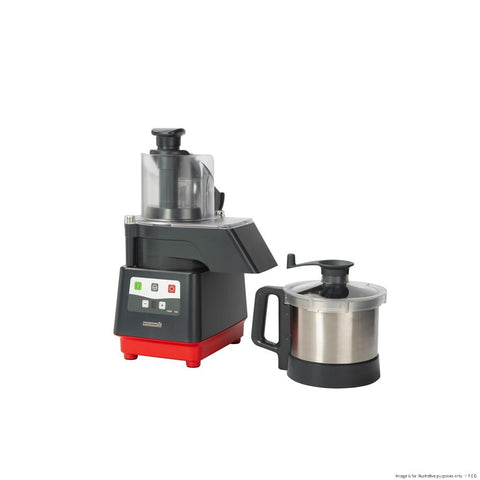
 CLEARANCE - Dito Sama PREP4YOU Combination Cutter/Slicer 9 Speeds 3.6L Stainless Steel Bowl - P4U-PV301S3-VIC1058
252(W) x 334(D) x 527(H)mm
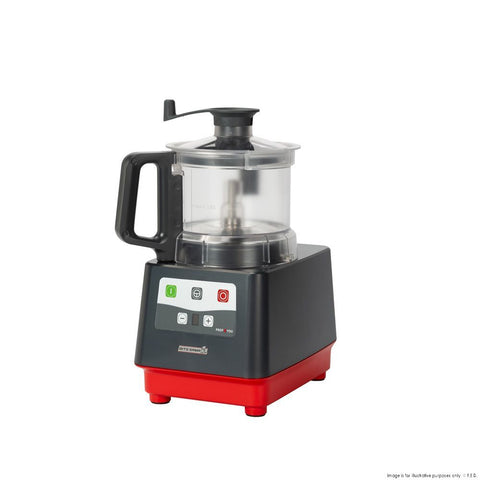
 CLEARANCE - Dito Sama PREP4YOU Cutter Mixer Food Processor 9 Speed 2.6L Copolyester Bowl - P4U-PV2-VIC1057
247(W) x 328(D) x 456(H)mm

 Hallde Vertical Cutter Mixer - 4 Lt - VCM-41
260(W) X 290(D) X 440(H)mm

 Hallde Vertical Cutter Mixer - 3Ph, 4 Lt - VCM-42-3PH
260(W) X 290(D) X 440(H)mm

 Hallde Vertical Cutter Blender 3Ph, 6 Lt - VCB-62-3PH
310(W) X 350(D) X 480(H)mm

 Hallde Vertical Cutter Blender 6 Lt - VCB-61
310(W) X 350(D) X 480(H)mm

 Hallde Continuous Feed Vegetable Preparation Machine RG-400i - RG-400i-3PH-Continuous

 Hallde Manual Feed Vegetable Preparation Machine RG-400i - RG-400i-3PH-Manual

 Hallde Pneumatic Feed Vegetable Preparation Machine RG-400i - RG-400i-3PH-Pneumatic

 Hallde Combi Cutter - CC34 - CC-34
285(W) X 350(D) X 465(H)mm


 Apuro 5Ltr Bowl Cutter and Veg Prep Attachment with 4x Discs - SA799-A
285(W) x 470(H) x 346(D)mm

 Apuro Bowl Cutter Mixer 5Ltr - DM070-A
285(W) x 470(H) x 285(D)mm
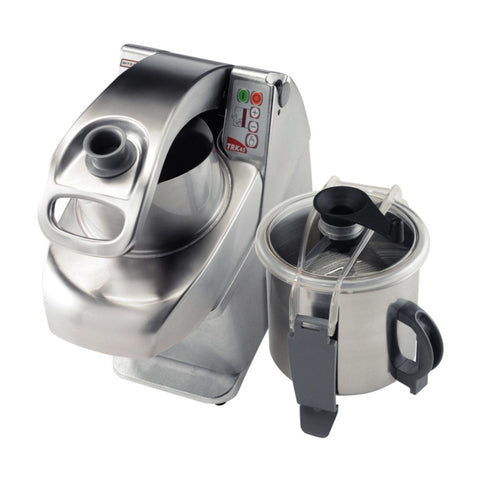
 Dito Sama Combined Cutter And Vegetable Slicer 4.5 Lt Variable Speed TRK45
252(W) x 485(D) x 505(H)mm
 Dito Sama Combined Cutter And Vegetable Slicer 7 Lt Variable Speed TRK70
252(W) x 485(D) x 530(H)mm
 Dito Sama Combined Cutter And Vegetable Slicer 5.5 Lt Variable Speed TRK55
252(W) x 485(D) x 505(H)mm

 Dito Sama Prep4You Combination Cutter/Slicer 9 Speeds 3.6L Stainless Steel Bowl P4U-PV301S3
252(W) x 334(D) x 527(H)mm

 Dito Sama Prep4You Cutter Mixer Food Processor 9 Speeds 3.6L Stainless Steel Bowl P4U-PV3S
252(W) x 334(D) x 476(H)mm

 Dito Sama Prep4You Combination Cutter/Slicer 1 Speed 3.6L Stainless Steel Bowl P4U-PS301S3
252(W) x 334(D) x 527(H)mm

 Dito Sama Prep4You Cutter Mixer Food Processor 9 Speed 2.6L Copolyester Bowl P4U-PV2
247(W) x 328(D) x 456(H)mm

 Dito Sama Prep4You Cutter Mixer Food Processor 1 Speed 3.6L Stainless Steel Bowl P4U-PS3S
252(W) x 334(D) x 476(H)mm
 Dito Sama Food Processor K45VS
256(W) x 415(D) x 482(H)mm

 Yasaki Double Speeds 5L Table Top Cutter Mixer / Bowl Cutter BC-5V2
326(W) x 275(D) x 521(H)mm

 Dynamic Dynacube food cutter 30/50KG/H - CL010
330(W) x 330(D) x 400(H)mm


 Hobart 45 Quart Cutter Mixer - HCM450-20

 Hobart Food (Bowl) Cutter - 84186-38
Commercial food processors and cutters do the chopping, mincing, emulsifying and slicing that a kitchen would otherwise do by hand, and they do it to a consistent size every time. A commercial food processor is the bowl machine for mixes, purees and pastes; a cutter attachment turns the same machine into a slicer or grater for volume prep.
The decision is almost always between a bowl machine and a continuous feed machine. A bowl processes a batch and stops; a veg processor with a feed chute runs continuously and keeps going as long as you keep loading it. Plenty of kitchens own one of each.
Related ranges cover the rest of the prep bench: vertical cutters for high-volume batch work, veg prep machines for bulk vegetable output, cutter discs for the cut shapes themselves, and manual veg prep machines where power is not available. The wider food processor range sits above all of them.
These are higher-value machines, so Silverchef Rent-Try-Buy is worth a look if you would rather spread the cost while the kitchen is still proving the volume.
A bowl machine for anything you want processed as a batch to a controlled texture: pastes, dips, farces, emulsions, breadcrumbs. You can see what is happening and stop at the right moment.
A continuous feed machine for volume where the cut is the point rather than the texture: sliced onion, grated cheese, diced potato, shredded cabbage. If you are prepping kilos rather than litres, the feed chute wins and the disc you fit does the real work.
Work from the largest single batch you make, not the largest you can imagine. A bowl run half full processes unevenly at the bottom, and a bowl run to the brim will not move the product at all, so the usable window is narrower than the stated capacity.
If your batches vary a lot, two smaller machines are often more useful than one large one, because the second can be running a different product rather than waiting to be washed.
No. Discs and plates are matched to the machine's hub and the housing, so a disc from one brand will not fit another, and a disc from one model in a range may not fit its sibling. Buy them against the specific model.
Check what discs come in the box and what the range includes before you buy, because the discs are a meaningful share of the total cost. Our cutter disc range lists what fits what, and the product documentation for each machine names its own set.
Slice, grate, shred, julienne and dice are the common families, and each one is a different disc or a disc plus a grid rather than a setting on the machine. Thickness within a family is also disc-dependent.
Decide which cuts you actually sell before you buy. A kitchen that needs one dice and one slice is better served by a simple machine and two good discs than by a machine with a long accessory list it will never use.
That depends on your menu and the shape of your shifts, so we will not put a figure on it. Where it changes things most is consistency: an even dice cooks evenly, so the kitchen loses less product.
Count the hours one person currently spends on repetitive knife work. If that number is large and predictable, Silverchef Rent-Try-Buy lets you spread the outlay rather than carrying the machine and the roster at once.
Bowl, lid, blade, discs, pusher and the shaft seal, every time, without exception. These machines handle raw product and the blade housing is exactly where it will sit if you leave it.
Check whether the parts are dishwasher-safe for the model you choose, and whether the base is sealed well enough to be wiped down rather than hosed. Food-contact parts should be 304 stainless steel, which is the food-safety grade in Australia, and it washes without staining or pitting. A run of stainless steel bench beside the machine makes the strip-down quicker.
On a solid bench at the prep end, near a sink and a power point, with space on both sides for the product going in and the containers coming out. These machines walk if the bench is slick, so they want a surface with some grip and no vibration.
Keep it off the cookline. It is a cold prep machine and the heat, the grease and the traffic on a hot line will shorten its life. For soups and sauces processed in the pot instead, a stick blender goes to the product rather than the other way around.

We have a special page just for stock that's warehoused in Perth.
Click Here to see all WA stockWhat our customers say about us on Google, and how Google scores our store for things like shipping and returns.
Store scores from Google